Token Trouble: Where Britain's Sanctions Net Slips Around Dollar Stablecoins

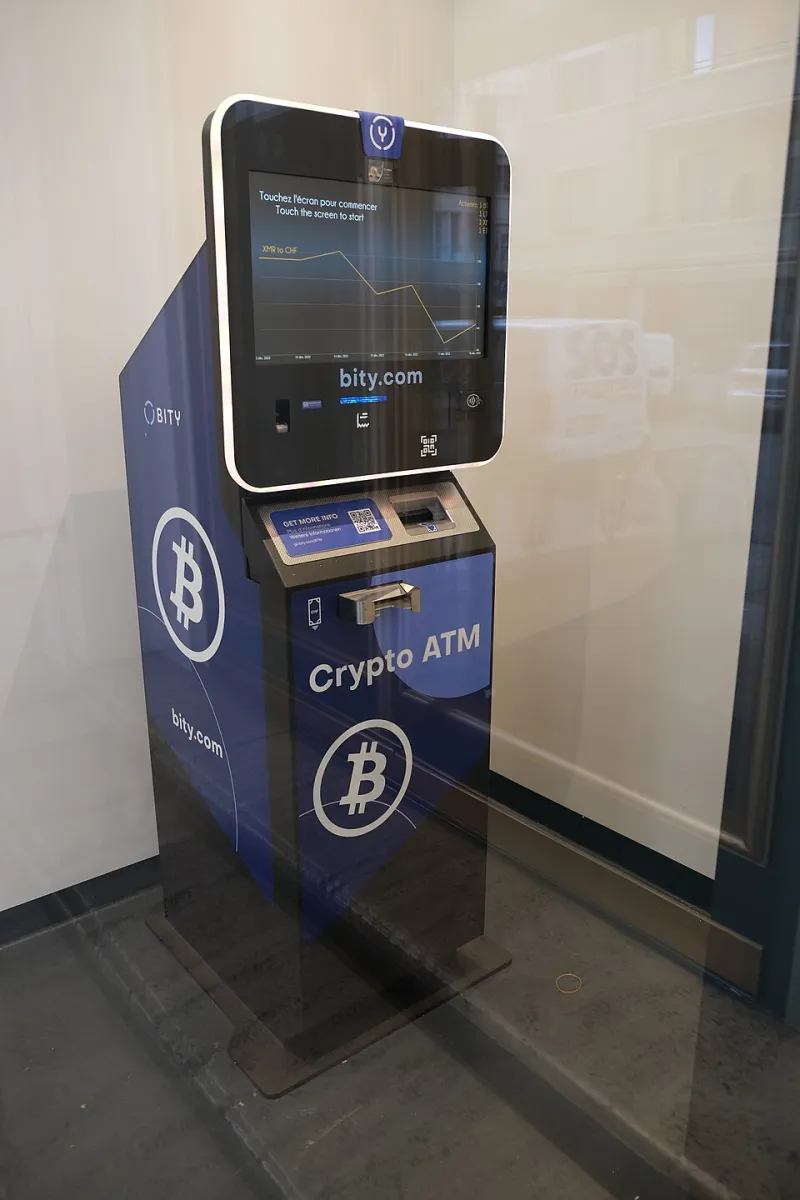
Photo: PayCash Community, CC BY-SA 4.0, via Wikimedia Commons
Sanctions evasion rarely announces itself as such. It arrives as a payment instruction, a wallet address, a customer who can explain every step except the one that matters. In 2026, that step increasingly involves a dollar-pegged stablecoin. The appeal is obvious: tokens such as USDT and USDC move across borders at speed, settle outside conventional banking hours and can be held without a correspondent bank. For a designated individual or entity, that is not a curiosity. It is infrastructure.
Britain's response has been incremental rather than architectural. The Office of Financial Sanctions Implementation (OFSI) has issued cryptoasset guidance. The Financial Conduct Authority (FCA) registers cryptoasset businesses for money laundering purposes and polices financial promotions. Payment firms and e-money institutions apply their own controls under the Money Laundering Regulations. Yet no single UK regime is built around the stablecoin lifecycle: issuance, transfer, conversion and redemption. The result is a supervisory patchwork that leaves compliance teams to join the dots.
A toolkit built for accounts, not tokens
Traditional sanctions compliance assumes an identifiable institution holding an account in the name of a customer. Stablecoins disrupt that model. A token can pass through self-custodied wallets, decentralised exchanges and offshore trading desks before it reaches a UK-regulated on-ramp or off-ramp. The regulated firm may see only the final leg.
OFSI's guidance is clear that sanctions apply to cryptoassets as they apply to funds and economic resources. But enforcement depends on firms knowing what they are looking at. UK cryptoasset businesses must screen customers and, where relevant, wallet addresses. Payment firms must consider whether a stablecoin conversion is part of a sanctions nexus. In practice, many rely on blockchain analytics providers whose coverage varies by token, chain and clustering methodology.
There is also the issuer question. Major stablecoin issuers can freeze tokens at the request of law enforcement or in response to sanctions. That is a powerful tool, but it is not a UK statutory power. It depends on private contractual terms, foreign legal requests and the issuer's willingness to act. A UK firm cannot assume that because a token is technically freezable, the freeze will happen quickly or at all.
The on-ramp problem: fiat-to-token at the edge
The most exposed point is where sterling or dollars become tokens. UK customers can buy stablecoins through FCA-registered exchanges, offshore platforms serving UK users, over-the-counter brokers and, in some cases, payment firms that treat cryptoasset conversion as an adjacent service. Each route has a different supervisory perimeter.
Red flags at the on-ramp are often behavioural rather than technical. A customer may use a new device, provide a plausible but unverifiable source of funds, and immediately move the purchased tokens to an unhosted wallet. A payment firm may see multiple small transfers from different accounts that aggregate into a single stablecoin purchase. A merchant descriptor may not match the stated business activity. These are not conclusive, but they are the kind of signals that should trigger enhanced due diligence.
The Travel Rule, which requires originator and beneficiary information for certain cryptoasset transfers, has improved the paper trail since its introduction. It has not solved the problem of the unhosted wallet. Nor does it cover every conversion at the fiat boundary. For payment firms, the gap is especially awkward: they may be regulated for payments, not for cryptoassets, yet they are handling the moment when dirty sterling becomes a tokenised dollar.
The off-ramp: where value re-enters sterling
The off-ramp is where sanctions risk becomes tangible. A sanctioned actor who holds stablecoins needs a way to convert them into fiat, pay suppliers or purchase assets. That usually means an exchange, a broker or an OTC desk with a UK banking relationship. The final regulated firm may be several hops away from the original sanctioned address.
Chain analytics can show exposure to a designated wallet, but exposure is not the same as ownership. A customer may receive stablecoins from a mixer, a sanctioned exchange or a wallet linked to ransomware. Each scenario demands a different response. A single hop from a high-risk source may be explainable; a pattern of round-number conversions after receipt from unhosted wallets is less so.
UK firms should also watch for conversion patterns that suggest layering. Examples include stablecoins moved across multiple chains before redemption, repeated purchases just below internal thresholds, use of third-party payment accounts, and customers who are unusually knowledgeable about issuer freeze policies. None of these is proof of sanctions evasion. Together, they are a reason to ask harder questions.
Red flags for exchanges and payment firms
- Inbound stablecoin transfers from unhosted wallets with no plausible link to the customer's stated activity.
- Multiple customer accounts using the same device, IP address or wallet cluster.
- Conversion requests immediately after receipt of funds from a high-risk exchange or mixing service.
- Source-of-funds explanations that rely on vague overseas business income or family support.
- Reluctance to provide beneficiary information for outbound transfers.
- Use of privacy-enhancing tools or chain-hopping shortly before an off-ramp request.
- Customers who ask detailed questions about issuer freeze policies or sanctions screening thresholds.
What a dedicated token regime would need to solve
A dedicated UK stablecoin sanctions regime would not need to reinvent the wheel. It could build on existing AML and sanctions obligations while addressing the specific risks of tokenised dollars. That might mean clearer OFSI guidance on wallet screening and issuer freezes, a statutory reporting route for suspected sanctions evasion involving cryptoassets, and explicit expectations for payment firms that touch stablecoin conversions.
It would also require supervisory capacity. The FCA's cryptoasset register is not a sanctions supervisor, and HMRC's money laundering supervision of payment firms is risk-based and stretched. A token regime that exists only on paper would add another layer of confusion rather than close the gap.
The more fundamental question is whether Britain wants to regulate stablecoins as payments infrastructure, as securities-like instruments or as a sanctions-sensitive value transfer system. Each framing leads to different controls. Until that question is answered, UK compliance teams will continue to operate in the space between guidance and reality, watching the dollar token economy move faster than the rulebook.
For Trace readers, the lesson is not that stablecoins are uniquely illicit. Most flows are legitimate. The lesson is that the UK's sanctions toolkit was built for a financial system with visible intermediaries. Stablecoins are intermediaries too, but they are issuers, validators, wallet providers and analytics firms, and not all of them sit inside the UK perimeter. Closing the gap means seeing the whole chain, not just the last regulated link.