The Ownership Gap at Britain's Freeports: Why Customs Relief Deserves Sanctions Scrutiny
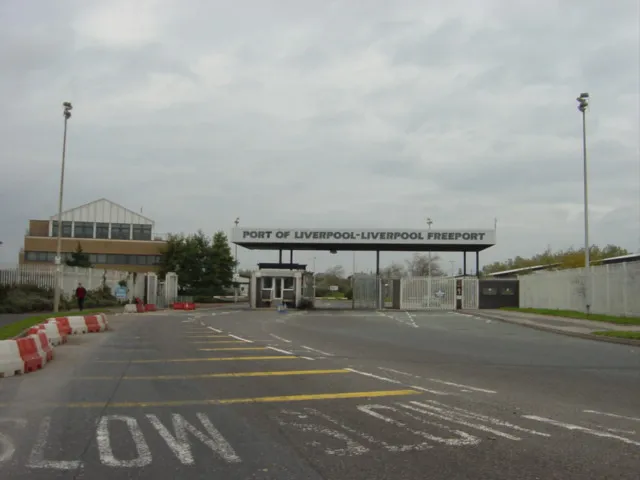
Photo: Sue Adair, CC BY-SA 2.0, via Wikimedia Commons
Britain's freeports are, in 2026, among the government's most visible instruments of regional economic policy. Their promise is straightforward: customs reliefs, simplified procedures, and tax incentives designed to attract trade, manufacturing, and investment to designated sites. That promise is real. But so is the compliance risk. Freeports combine fragmented oversight, complex ownership chains, and a customs architecture built for facilitation rather than transparency. The result is a blind spot that sanctions enforcement and anti-money-laundering teams cannot afford to ignore.
The Architecture of Relief
Freeports operate through customs sites and tax sites. Within customs sites, authorised businesses can use special procedures to defer or reduce duties, store goods without payment, and process or re-export them under simplified rules. HMRC administers the customs regime. Freeport operators manage access to the site. Local authorities and freeport governance bodies promote the project. Companies House records corporate ownership. The Office of Financial Sanctions Implementation enforces sanctions. No single body owns the end-to-end risk picture. That is not a criticism of any one agency; it is a structural feature. But structure matters when the question is who ultimately benefits from goods moving through a low-tax, low-friction zone.
Ownership is the first gap. A freeport tenant may be a UK company with a straightforward filing history. Its parent may sit in a jurisdiction with limited beneficial ownership disclosure. The freeport operator may know the tenant's managing director but not the ultimate beneficial owner. A bank may see the tenant's account activity but not the customs declarations. A freight forwarder may see the declarations but not the corporate chain. Each party holds a fragment. Sanctions evasion thrives on exactly that kind of fragmentation.
Where the Gaps Compound
Trade-based money laundering and sanctions evasion do not require a freeport to be complicit. They require a freeport to be useful. The useful features are well known: duty relief can make goods cheaper to hold; simplified procedures can reduce documentation; re-export rules can obscure final destination; and the presence of many companies at a single address can normalise unusual activity. None of these features is inherently illicit. But each becomes a red flag when combined with opaque ownership, inconsistent commercial logic, or a sanctions nexus.
Consider a hypothetical that is not hypothetical enough. A UK company imports machinery through a freeport customs site. The goods are declared for re-export. The UK company is owned by a Cypriot entity, which is owned by a BVI company, which is owned by a trust. The freeport tenant's stated business is equipment leasing. The freight forwarder has handled three similar shipments in six months, each with a different consignee in a third country. The bank sees payments from a UAE intermediary that does not appear in the customs paperwork. No single fact is decisive. Together they describe an ownership and trade pattern that warrants enhanced scrutiny.
A Red-Flag Map for Compliance Teams
For banks, freight forwarders, and compliance teams, the freeport context should sharpen rather than replace existing risk assessments. Practical red flags include:
- A freeport tenant whose beneficial ownership cannot be verified beyond the first corporate layer.
- Customs declarations that describe goods, values, or end uses inconsistent with the tenant's known business.
- Repeated use of freeport procedures for goods that undergo minimal or no processing.
- Freight forwarders or agents used repeatedly without a clear commercial rationale.
- Payments routed through jurisdictions that do not match the trade route or the ownership chain.
- A freeport address shared by multiple companies with overlapping directors or agents.
- Reliance on self-declared end-use certificates where sanctions-sensitive goods are involved.
- A tenant that changes ownership or directors shortly before or after a shipment.
These are not proof of wrongdoing. They are reasons to ask better questions, and to document the answers.
What a 2026 Policy Response Should Look Like
The policy response should be proportionate and targeted. First, freeport tenants should be subject to a mandatory beneficial ownership declaration, held in a register accessible to HMRC, OFSI, and supervised financial institutions. Second, HMRC and OFSI should establish a joint data-sharing protocol for freeport trade data, including declared end users and re-export destinations. Third, freeport operators should be required to conduct enhanced due diligence on tenants and to report material ownership changes. Fourth, the National Audit Office should publish a periodic review of freeport customs reliefs and their use. Fifth, the government should publish aggregate freeport trade data, anonymised where necessary, so that compliance teams and researchers can test risk models against reality.
None of these measures would stop legitimate trade. They would make illegitimate trade harder to hide. The alternative is to wait for a scandal, then retrofit controls onto a system that was designed for speed. Britain's freeports do not need to become a sanctions loophole. But without an ownership audit, they remain a plausible candidate.