The Wall That Money Can Buy: Art, Provenance and Britain's Ownership Blind Spot

Photo: Michal Klajban, CC BY-SA 4.0, via Wikimedia Commons
A painting is a peculiar asset. It can be worth millions, stored for years and transferred without ever moving. Its value depends on taste, scarcity and reputation. Its legitimacy depends on something less glamorous: a paper trail. In the UK art market, that trail is often incomplete. For anyone tracking illicit money, the gap between what a painting is worth and what can be proved about its ownership is where the risk sits.
Since 2020, art market participants have been supervised by HMRC for anti-money laundering purposes when trading works of art valued at €10,000 or more. That was a sensible extension of the Money Laundering Regulations. It brought galleries, auction houses and private dealers into a regime that already covered banks, accountants and estate agents. But supervision by registration is not the same as supervision by examination. The UK art market remains a fragmented, relationship-driven sector in which a credible compliance culture in one auction house can sit alongside a small dealer who treats customer due diligence as an afterthought.
Supervision without scrutiny
HMRC's art market supervision has been light-touch in practice. Many participants are small businesses. Some are intermediaries who never take ownership of the artwork. Others are advisors who arrange private sales between collectors. The regulations require risk assessments, customer due diligence, beneficial-ownership checks and suspicious activity reporting, but the quality of implementation varies widely.
Auction houses typically have dedicated compliance teams and robust sanctions screening. Major galleries do too. The weak points are more likely to be private dealers, art advisors, shippers, storage providers and offshore holding structures. These are not necessarily bad actors. They are often the nodes where information is thinnest.
The supervisory model also creates a reporting gap. There is no public register of art market participants in the way there is a public register of companies. HMRC can inspect, but inspections are risk-based and resource-constrained. The result is that a buyer, or a bank financing a purchase, may have little independent way to verify that a dealer has done the checks it claims.
Provenance is not ownership
Provenance and beneficial ownership are often confused. Provenance is the history of an object: who owned it, where it was exhibited, how it was sold. Beneficial ownership is about the real person who ultimately controls the entity or arrangement that holds title. A painting can have a rich exhibition history and still be owned through a chain of companies that obscures a sanctioned individual.
In practice, art market due diligence often relies on invoices, catalogues raisonnés and dealer warranties. These are useful, but they are not ownership registers. A private sale may involve an agent acting for an undisclosed principal. A company may be incorporated in a jurisdiction with limited disclosure. A trust may hold the artwork, with the trustee named in documents but the beneficiary hidden.
The UK's Register of Overseas Entities has improved transparency for overseas companies owning UK property. It does not cover art. Companies House reform is improving the accuracy of the UK company register, but it does not create a global ownership record for movable assets. For artworks, the ownership chain is often built transaction by transaction, and each transaction depends on the willingness of the parties to disclose.
The storage question
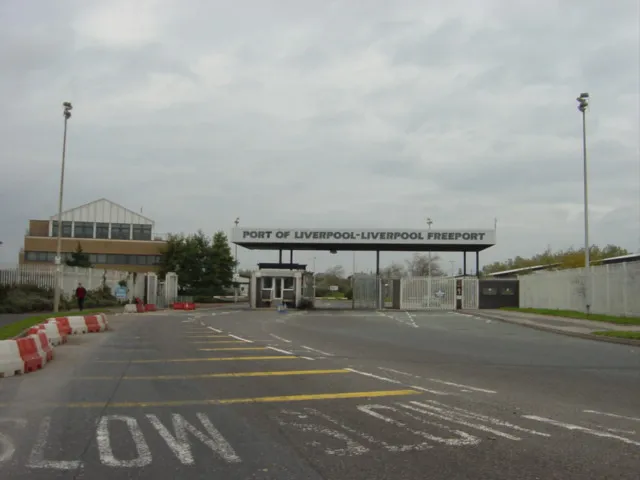
Freeports and similar storage arrangements deserve scrutiny, but not caricature. UK freeports are customs sites with duty suspension and tax advantages. They are not offshore secrecy jurisdictions. Storing art in a freeport is lawful, and many collectors use such facilities for legitimate reasons: security, climate control and logistics.
Yet storage can create a transparency gap. An artwork can change ownership while remaining in the same crate in the same facility. The physical object does not move, so there is no customs event and no obvious moment of inspection. If the storage operator is not an art market participant, it may not be subject to the same customer due diligence obligations as a dealer. If the ownership structure changes through an offshore company, the buyer's identity may never be verified by anyone in the UK.
That is the freeport-adjacent risk: not that freeports are inherently illicit, but that they concentrate high-value movable assets in a place where ownership can change quietly. A credible regime should consider whether storage operators and logistics providers handling high-value art should have explicit obligations to verify beneficial ownership and report suspicious changes of control.
The intermediary layer
Art transactions are rarely simple. They involve advisors, agents, insurers, shippers, conservators and storage providers. Each may hold a piece of the puzzle. The regulations focus on art market participants, but the intermediary layer can shield the principal from scrutiny.
A dealer may be told that the seller is a private collector acting through an agent. The agent may be offshore. The invoice may come from a company in a jurisdiction with nominee directors. The artwork may be shipped from a freeport. Each step is individually plausible. Together, they make it difficult to establish who ultimately benefits from the sale.
Sanctions risk adds another dimension. UK persons must comply with sanctions regardless of sector. Art market participants should screen buyers, sellers and beneficial owners against designated persons and entities, and consider ownership and control. A painting owned by a company that is controlled by a designated individual is caught, even if the company itself is not named. That requires looking through the corporate structure, not just checking the invoice.
Red flags in the gallery
- A buyer who is reluctant to provide identification or who insists on using a third party to pay.
- A seller who cannot explain how they acquired the artwork, especially where the provenance chain has unexplained gaps.
- Ownership structures involving offshore companies, trusts or nominees that do not match the buyer's stated profile.
- Requests to store the artwork in a freeport or bonded facility immediately after purchase.
- Cash payments, unusual payment routes or payments from accounts in unrelated jurisdictions.
- A sudden interest in a specific artist or period that is inconsistent with the buyer's known collection.
- An agent who refuses to disclose the principal's identity or provides only a generic letter of authority.
What a credible 2026 baseline should look like
A credible baseline would start with clearer expectations for beneficial-ownership verification. It is not enough to ask for a company certificate. Art market participants should be required to identify the ultimate beneficial owner behind an entity, understand the ownership and control chain, and screen against sanctions lists. Where the buyer or seller is a trust or similar arrangement, the trustee and beneficiaries should be identified.
Second, provenance should be treated as part of customer due diligence, not a marketing document. Dealers should be able to demonstrate that they have tested the provenance chain for gaps and red flags. Third, HMRC should publish more supervisory data: the number of inspections, the outcomes and the enforcement actions. Transparency about supervision would help legitimate firms demonstrate their standards and would expose those that lag.
Fourth, the storage and logistics layer needs attention. Not every storage operator should become a regulated art market participant. But where high-value art is stored and ownership can change without physical movement, there should be a clear obligation to verify beneficial ownership and report suspicious activity. Fifth, sanctions guidance for the art market should be consolidated. Firms should not have to piece together OFSI guidance, HMRC money laundering rules and sector-specific advice.
None of this would eliminate illicit money from the art market. Cultural sectors are global, relationship-based and resistant to box-ticking. But a credible baseline would make it harder to buy respectability with a painting and a plausible story. For Trace readers, the point is simple: the wall is not the problem. The problem is what the wall is hiding, and who is allowed to hide behind it.